
An unincorporated community in Lewis and Clark County, Augusta, Montana, was first established in 1884 and boasts a history that predates Montana’s Statehood by over five years.
Beginning as the homestead of a local rancher, Fred Walrath, Augusta served as a vital trading center for the cattle and sheep ranches in Northern Lewis and Clark County.
By the 1890s, the community had blossomed into a full-fledged town, home to several turn-of-the-century houses, hotels, saloons, mercantile, and the Mannix & Vaughn’s General Store.
Augusta continued to flourish for nearly two decades until 1912. At that time, the Great Northern Railway had announced plans to extend its line westward from the Great Falls Region.
However, instead of reaching the already established Augusta, the railroad instead passed by just north of the town, establishing a new station and community which would become to be known as Gilman.
While many individuals and businesses migrated to the new community at first, Gilman was not meant to last. By 1923 the new town began to diminish thanks to several factors that included draught and the fact that the railroad had finally extended to Augusta.
Several of Gilman’s buildings were moved to Augusta, growing the community back into the trade center for northern Lewis & Clark County ranching communities.
With a population of only 316 as of the 2020 census, Augusta remains one of the most preserved examples of a small town in northwestern Montana. Visiting the community is like stepping back into the past, with several of the original buildings still present on the historic Main Street.
Guide to Augusta, Montana
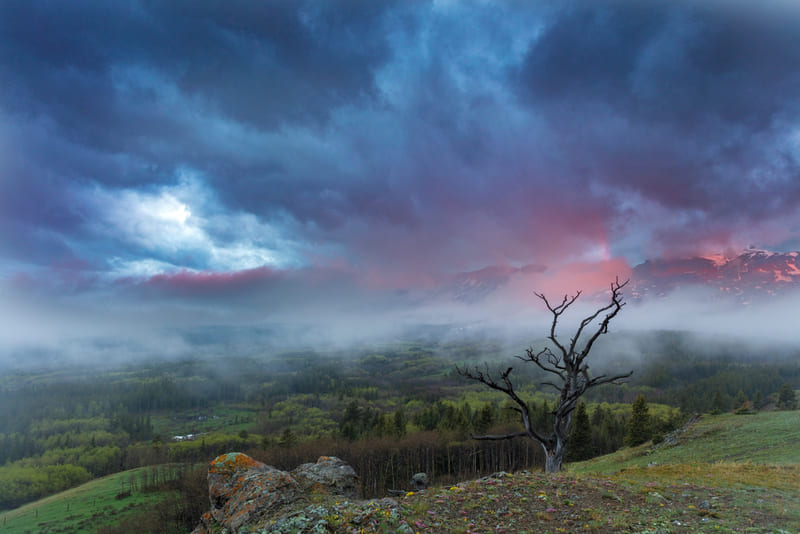
Along with its historic preservation, Augusta is located along the borders of the Bob Marshall Wilderness and the adjoining Scapegoat Wilderness and is only a short drive from Glacier National Park. As a result, it is a fantastic destination for exploring Montana’s traditional small-town cultures while also acting as a doorstep to the many natural wonders of Northwestern Montana.
Main Attractions
Bob Marshall Wilderness Complex

Located just east of Augusta, the Bob Marshall Wilderness Complex includes the Bob Marshall, the Great Bear, and the Scapegoat Wildernesses and occupies more than 1.5 million acres of the pristine natural landscape of Northwestern Montana.
The third largest Wilderness in the lower 48 states, the Bob Marshall Complex spans from Glacier National Park in the North and Rogers Pass in the South. It features a massive variety of ecological zones and topography, including towering limestone reefs, ranges of colossal mountains, expansive verdant forests, broad basins and valleys, and two designated rivers.
Along with extensive hiking trails and backcountry camping opportunities, visitors to the Bob Marshall Wilderness Complex can explore some of the best wildlife habitats in the country and may even spot the region’s thriving populations of elk, deer, moose, mountain goats, bighorn sheep, black bears, and even the threatened grizzly bear.
Glacier National Park

Considered the Crown of the Continent, Glacier National Park is one of, if not the most significant highlight of Northwestern Montana and is a must-visit when traveling to the region.
First established in 1910, the National Park is one of the most pristine preservations of the state’s beautifully idyllic countrysides and features breathtaking views of rugged terrains carved out by the millennia of ancient ice rivers that had once flown through it.
Today the park protects acres of colorful alpine meadows, hundreds of roaring waterfalls, leagues of dense forest canopies, over 200 vivid life-filled lakes, and approximately 25 glaciers beckoning adventurers.