

Got an adventurous soul and clamoring for your next great adventure? The Big Sheep Creek Backcountry Byway personifies the rugged Montana spirit with 55 miles of remote views, uninhabited landscapes, and plenty of primitive camping for the daring.
Located in the far southwest corner of Montana and pressed up against the Idaho border, this route runs between the tiny town of Dell and Highway 324 near the Clark Canyon Reservoir.
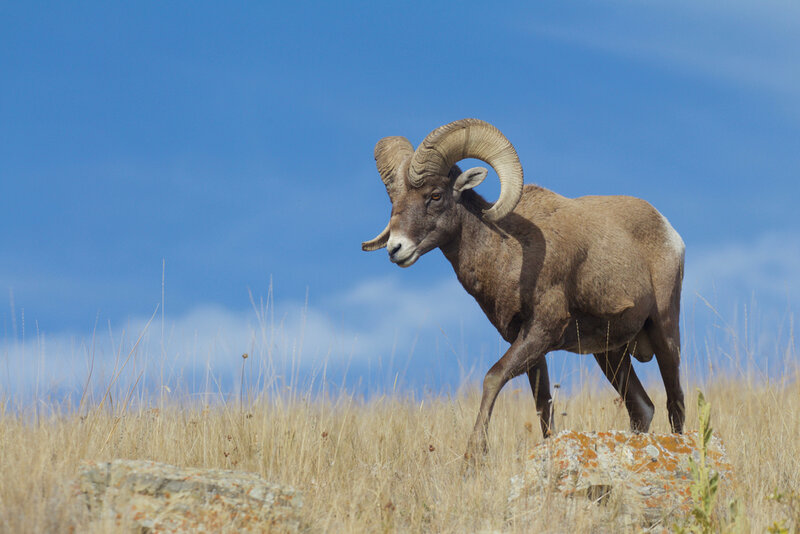
But beyond its end markers, the backcountry byway makes for some stunning views of Big Sheep Creek, the Tendoy Mountains, the Beaverhead Mountains, the Continental Divide, and the gorgeous Medicine Lodge Valley – even a few bighorn sheep, if you can spot them.
Read on for more on this unique Montana byway in Beaverhead County that still has traces of ancient indigenous life, untethered to society but firmly placed within the greater Montana ecosystem.
While it may be remote, the Big Sheep Creek Backcountry Byway offers fantastic places to fish, camp under the stars, and howl at the full moon. Let’s get into it!
The Big Sheep Creek Backcountry Byway, Beaverhead County – A Complete Guide
The Big Sheep Creek Backcountry Byway is a dirt road that becomes nearly impassable when wet and is best to traverse in a dry season. The best time to arrive is May through October, but the road remains open in the winter. The closest town with gas is Dell and the closest accommodations can be found in Dillon.
Scenic Drive Stats
- Length: Approximately 55 miles in length
- Time: This scenic drive takes around an hour to complete
- Traffic: is minimal here:,light to non-existent
- Terrain: While 4WD vehicles are not required, the mostly gravel road spits out onto a dirt road that can sputter even high-clearance vehicles
- Highlights Include: Big Sheep Creek, the Tendoy Mountains, the Beaverhead Mountains, the Continental Divide, the Medicine Lodge Valley, stories around the campfire
History Along the Big Sheep Creek Backcountry Byway

The history of the area surrounding the Big Sheep Creek byway extends far behind the present-day understanding of life in Montana – or our nation, for that matter.
Driving through this region, it’s clear that natural life continues here in an all-encompassing manner, far removed from light pollution, society – even gas stations – beyond a few isolated ranches.
Originally home to the Shoshone-Bannock, Bitterroot Salish, and their more nomadic ancestors, the people who came through this unchanged area hunted sheep, deer, elk, fish, and more as part of a greater subsistence way of life.
Traveling along quiet roads, one can imagine indigenous camps in the canyon or mountain bases, before they were stamped out by homesteaders and European settlers.
Even these homesteaders play a role in the history of the area, though, clearly taking only what was necessary for their survival to leave pristine surroundings for us to enjoy.
Move further north and you’ll hit Bannack State Park, the grounds of a former gold mining town that now hosts an even lonelier existence than their nearby byway.